
Jan Casey on The Nowhere Sisters, Kindertransport, and Untold Stories of Women in Wartime
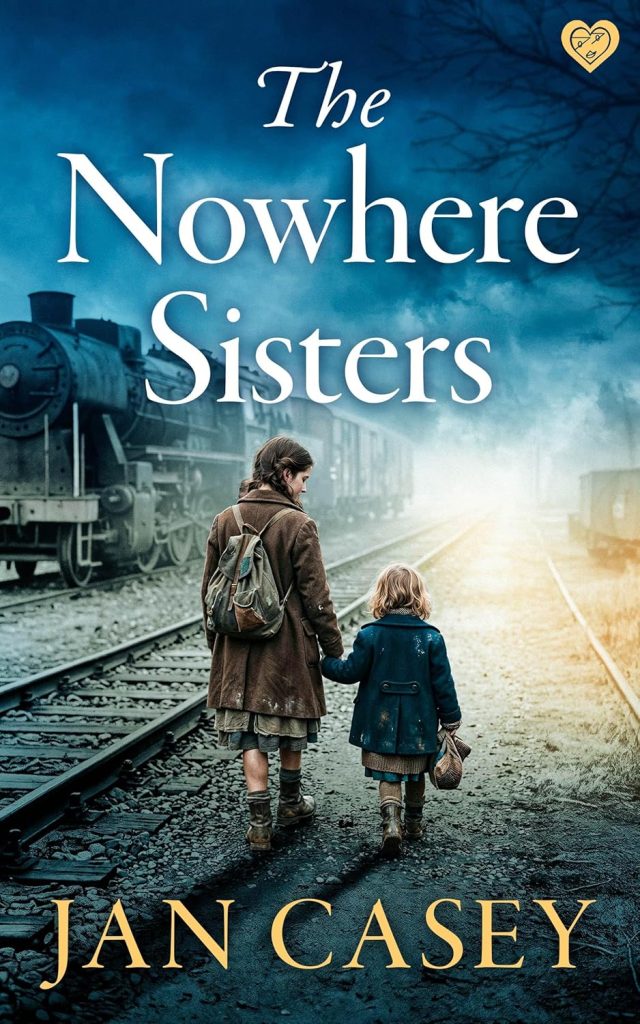
Your new novel, The Nowhere Sisters, opens in Berlin in 1938 and follows children escaping through the Kindertransport. What first drew you to this part of history?
All of my books are set during the Second World War and focus on women or girls undertaking roles that aren’t usually associated with them. While researching the Kindertransport experience, I became fascinated by the emotional impact it must have had — not just in the moment, but across the children’s entire lives.
The trauma must have been enormous. These children were separated from everything they knew and sent somewhere completely unfamiliar. I found myself wondering how those experiences shaped them emotionally as they grew older.
You’ve written several novels set during the war. What originally inspired your interest in this period?
It actually started quite unexpectedly. During my Creative Writing MA, I needed an idea for a novel. My husband and I were on a Thames riverboat cruise when the guide mentioned that Waterloo Bridge was also known as “Ladies Bridge” because it was rebuilt by women during the Second World War while the men were away fighting.
My mother lived in London during the war and I had never heard that story before. I became obsessed with researching it. That eventually became my first novel, and after that publishers kept asking me to continue writing about the period.
The title The Nowhere Sisters is intriguing because the girls aren’t actually sisters. How did that relationship develop?
That’s really the emotional hook of the story. The older girl, Margaretta, is twelve when she boards the Kindertransport. She’s asked to look after a four-year-old girl travelling alone, and in a moment of instinct she tells people they’re sisters.
She wants someone to love, and someone to love her. Once they arrive in England, they’re taken into a foster family with another girl, and together they become “the three sisters.”
I had a rough idea of their emotional journey before I started writing, but the relationships evolved naturally as the story developed.
Are you someone who plans your novels carefully, or do you discover the story while writing?
A bit of both. I usually begin with vivid scenes in my mind. For The Nowhere Sisters, I could clearly picture the opening scene of the girls boarding the train.
I also normally know the ending before I start. I’m always writing toward that destination. But the plot itself stays fairly loose because I like being open to discoveries along the way.
Historical fiction readers love authenticity and detail. What does your research process look like?
I do a great deal of research, but fortunately I genuinely enjoy it. I’ve spent time in the Metropolitan Archives, the National Archives, and the Imperial War Museum researching details from the period.
At the Metropolitan Archives there’s an extraordinary map showing every bomb dropped on London during the war, including the damage and casualties. Seeing things like that really helps immerse me in the world of the story.
But I try not to overload the novels with research. I never want them to feel like history lessons. I focus on the small details that create authenticity — clothing, food, transport, daily life.
Was there anything during your research for this book that particularly shocked or stayed with you emotionally?
What really affected me was learning that some Kindertransport children arrived in England expecting safety and kindness, only to be treated very badly by the families they were placed with.
That was heartbreaking to think about. They had already experienced fear, separation, and uncertainty, and then some found themselves in difficult or unloving homes.
There’s a scene where Margaretta is wrongly accused of stealing by her foster mother, and that was quite painful to write.
Your books all focus on women during the war, but each feels emotionally distinct. How do you achieve that?
I try to give each character a completely different emotional background and set of circumstances. Some have supportive families, some have nobody. Some are uprooted from other parts of the country to take on war work in London.
With The Nowhere Sisters, it was interesting because much of the first half is written from the perspective of children. That was challenging, but it also helped me find very different voices for the girls.
Although this isn’t strictly a romance novel, love and relationships still play an important role. Was that balance important to you?
Yes, definitely. One of the girls grows up to be very beautiful and successful, but she struggles to find love. Another character, who is less traditionally glamorous, builds a strong and lasting marriage very young.
I wanted to show that attraction and romance aren’t always straightforward, and that love doesn’t necessarily follow the paths we expect.
Have you ever imagined who would play these characters if the book became a television series?
I have thought about it! Cate Blanchett would be wonderful in one of the roles, perhaps as the older sister later in life.
There’s also an actress from Call the Midwife I imagined for the younger German girl, though I can never remember her name. But honestly, I try not to think too much about adaptations. If it happens, wonderful — but I mainly focus on the books themselves.
What does a typical writing day look like for you?
I usually spend the morning procrastinating and convincing myself I can’t possibly write another book.
Then eventually I sit down around ten o’clock and aim for a word count rather than a time limit. I try to write at least a thousand words a day, depending on deadlines.
The next morning, I edit what I wrote the day before before moving forward again.
What are you working on next?
I’m currently writing my second book for Joffe Books, which is also set during the Second World War. This one focuses on a woman working for the SOE as a secret agent.
Unlike some of the overlooked wartime roles I’ve explored before, the female agents dropped into France during the war are incredibly well documented, so the research has been fascinating.
Connect with Jan
- Facebook: @JanCasey
- The Nowhere Sisters is available now on Amazon.
